




SLU-PP 332
£209.00
BAC Water
Price range: £3.00 through £4.00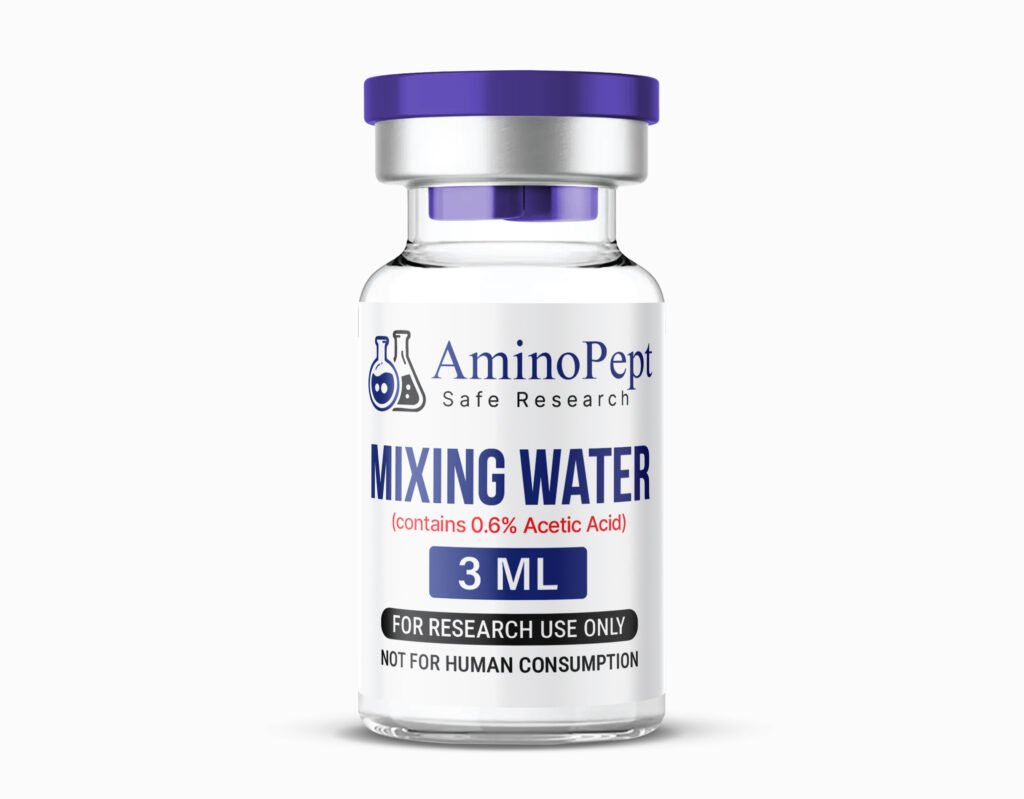
Acetic Water (0.6% Acetic Acid)
Price range: £3.00 through £4.00
AOD 9604
£25.00
TB-500 + BPC-157
£29.00
Epithalon
£21.00
GHK-Cu
£16.00
Sema – GLP-1
£33.00
Sema + Cagri – GLP-1 Plus
£67.00
[email protected] | +48 729 554 214 | 

Peptides – shipping from Europe
1 x Metabolic Peptide GLP-1 Sema 5mg
FREE WITH ORDERS ABOVE 100 EURO
Free Shipping – FREE WITH ORDERS ABOVE 50 EURO
What Are Peptides?
The Biochemistry of Research Peptides
Peptides are short chains of amino acids linked by peptide (amide) bonds and represent a fundamental class of molecules in biochemical and molecular research. Within laboratory and academic environments, research peptides are widely used as analytical and experimental tools to study cellular signaling pathways, receptor–ligand interactions, enzymatic mechanisms, and protein structure–function relationships under controlled conditions.
In contrast to larger proteins—which typically consist of more than 50 amino acids arranged in complex three-dimensional structures—peptides are generally defined as linear sequences containing between 2 and approximately 50 amino acid residues. This smaller molecular size, combined with well-defined chemical properties, makes peptides particularly suitable for in vitro assays, analytical chemistry, and structural biology research.
In scientific research settings, peptides may serve as reference materials, experimental probes, or model substrates, enabling precise investigation of biochemical processes without the structural complexity associated with full-length proteins.
Peptide Classification in Laboratory Research
For analytical accuracy and experimental consistency, peptides are commonly classified based on the number of amino acid residues present in the sequence. These distinctions are essential when evaluating molecular weight, solubility, stability, and handling requirements in laboratory environments.
- Dipeptides and Tripeptides
Simple sequences consisting of two or three amino acids, frequently used in fundamental biochemical modeling and mechanistic studies. - Oligopeptides
Linear chains typically comprising 2 to 20 amino acid residues, commonly applied in receptor binding studies and molecular interaction research. - Polypeptides
Longer unbranched sequences containing approximately 21 to 50 amino acids, often used as intermediates between small peptides and larger protein constructs in structural and functional analysis. - Cyclic Peptides
Peptides in which the N-terminal and C-terminal ends are chemically linked, forming a cyclic structure. This configuration can enhance conformational stability and resistance to enzymatic degradation, making cyclic peptides valuable in stability and structure-focused research applications.
Peptides in Scientific and Analytical Research
Research peptides play an important role across a wide range of scientific disciplines, including:
- Biochemistry and molecular biology
- Receptor and ligand interaction studies
- Structural and conformational analysis
- Analytical method development and validation
- Cell-based and cell-free experimental systems
Their defined sequences and reproducible synthesis allow researchers to design experiments with a high degree of specificity and control, supporting reliable data generation in both academic and industrial laboratory settings.
A Brief History of Peptide Research
The scientific exploration of peptides began in the early twentieth century and progressed rapidly alongside advances in protein chemistry. A major breakthrough occurred in the 1960s with the development of solid-phase peptide synthesis (SPPS) by Robert Bruce Merrifield, a technique that enabled the efficient and precise synthesis of defined peptide sequences.
Since then, peptides have become indispensable tools in modern biochemical research. Improvements in synthesis methodologies, purification techniques, and analytical technologies—such as high-performance liquid chromatography (HPLC) and mass spectrometry—have expanded their use in experimental design, molecular analysis, and quality control processes.
Quality, Documentation, and Research-Use Context
At AminoPept, peptides are supplied strictly for scientific and laboratory research purposes. Emphasis is placed on purity, identity verification, and analytical consistency, with appropriate documentation available to support research and quality assurance requirements.
All compounds and information provided are intended exclusively for research use. They are not approved for use as medicines, dietary supplements, cosmetic ingredients, or consumable products, and are not intended for human or veterinary application.